Sbírka Frequency Of Atom Formula Zdarma
Sbírka Frequency Of Atom Formula Zdarma. In the bohr model, radiation appears when an electron makes a transition between energy levels, and the frequency is given by the change in the electron's energy divided by planck's constant. Have a grip on the fundamentals of atomic structure by accessing our formulas sheet and tables.

Tady How Would You Determine The Ionization Energy Of A Hydrogen Atom In Kj Mol If The Electron Is In Its Ground State Socratic
A is the maximum amplitude of the vibration coordinate q. It remains to define the reduced mass, μ. In general, the reduced mass of a diatomic molecule, ab, is expressed in terms of the atomic masses, ma and mb, as. Massof e − mass of h atom = 1 1837.1 μ = 1 m a + 1 m b.
26.12.2016 · ni and nf are the initial and final energy levels. It remains to define the reduced mass, μ. 19.06.2021 · if every atom except one is frozen and the number of collisions in one minute is counted, the collisional frequency (per minute) of a single atom of helium within the container could be determined. Massof e − mass of h atom = 1 1837. These two formulas look quite unrelated. & (deflection) anode rays < cathode rays. We can calculate the change in energy of falling the atom from one orbit to another and then apply planck's equation to calculate the required value of frequency. $\delta e = h\nu $ where $\delta e$ is the change in energy, h is thee planck's constant and $\nu $ …

The negative sign shows that energy is emitted. In general, the reduced mass of a diatomic molecule, ab, is expressed in terms of the atomic masses, ma and mb, as. In the bohr model, radiation appears when an electron makes a transition between energy levels, and the frequency is given by the change in the electron's energy divided by planck's constant. 1 μ = 1 m a + 1 m b. ¯¯¯¯¯¯¯¯¯¯¯¯¯¯¯¯¯¯¯¯¯∣∣ a a νλ = c a a ∣∣ −−−−−−−−−−−. The negative sign shows that energy is emitted. 19.06.2021 · if every atom except one is frozen and the number of collisions in one minute is counted, the collisional frequency (per minute) of a single atom of helium within the container could be determined. In the bohr model, radiation appears when an electron makes a transition between energy levels, and the frequency is given by the change in the electron's energy divided by planck's constant.

This is the basis for the equation. In general, the reduced mass of a diatomic molecule, ab, is expressed in terms of the atomic masses, ma and mb, as. Frequency and wavelength are related by the formula. We can calculate the change in energy of falling the atom from one orbit to another and then apply planck's equation to calculate the required value of frequency. & (deflection) anode rays < cathode rays... 26.12.2016 · ni and nf are the initial and final energy levels.

¯¯¯¯¯¯¯¯¯¯¯¯¯¯¯¯¯¯¯¯¯∣∣ a a νλ = c a a ∣∣ −−−−−−−−−−−. 19.06.2021 · if every atom except one is frozen and the number of collisions in one minute is counted, the collisional frequency (per minute) of a single atom of helium within the container could be determined. 1 μ = 1 m a + 1 m b. A is the maximum amplitude of the vibration coordinate q. Massof e − mass of h atom = 1 1837. $\delta e = h\nu $ where $\delta e$ is the change in energy, h is thee planck's constant and $\nu $ … It remains to define the reduced mass, μ. N = number of atoms per unit volume in the foil, z = atoms number, e = kinetic energy of the alpha The negative sign shows that energy is emitted.. & (deflection) anode rays < cathode rays.

A is the maximum amplitude of the vibration coordinate q... & (deflection) anode rays < cathode rays. We can calculate the change in energy of falling the atom from one orbit to another and then apply planck's equation to calculate the required value of frequency. Massof e − mass of h atom = 1 1837. (6.1.4.1) z i = ( … N = number of atoms per unit volume in the foil, z = atoms number, e = kinetic energy of the alpha ¯¯¯¯¯¯¯¯¯¯¯¯¯¯¯¯¯¯¯¯¯∣∣ a a νλ = c a a ∣∣ −−−−−−−−−−−. A is the maximum amplitude of the vibration coordinate q.

26.12.2016 · ni and nf are the initial and final energy levels... We can calculate the change in energy of falling the atom from one orbit to another and then apply planck's equation to calculate the required value of frequency. In general, the reduced mass of a diatomic molecule, ab, is expressed in terms of the atomic masses, ma and mb, as. This is the basis for the equation. 26.12.2016 · ni and nf are the initial and final energy levels. & (deflection) anode rays < cathode rays.. It remains to define the reduced mass, μ.

¯¯¯¯¯¯¯¯¯¯¯¯¯¯¯¯¯¯¯¯¯∣∣ a a νλ = c a a ∣∣ −−−−−−−−−−−... 19.06.2021 · if every atom except one is frozen and the number of collisions in one minute is counted, the collisional frequency (per minute) of a single atom of helium within the container could be determined. (speed) anode rays < < cathode rays.. N = number of atoms per unit volume in the foil, z = atoms number, e = kinetic energy of the alpha

It remains to define the reduced mass, μ. Massof e − mass of h atom = 1 1837. In general, the reduced mass of a diatomic molecule, ab, is expressed in terms of the atomic masses, ma and mb, as.. 19.06.2021 · if every atom except one is frozen and the number of collisions in one minute is counted, the collisional frequency (per minute) of a single atom of helium within the container could be determined.

& (deflection) anode rays < cathode rays.. ¯¯¯¯¯¯¯¯¯¯¯¯¯¯¯¯¯¯¯¯¯∣∣ a a νλ = c a a ∣∣ −−−−−−−−−−−. In general, the reduced mass of a diatomic molecule, ab, is expressed in terms of the atomic masses, ma and mb, as. & (deflection) anode rays < cathode rays. (speed) anode rays < < cathode rays. The negative sign shows that energy is emitted. Have a grip on the fundamentals of atomic structure by accessing our formulas sheet and tables. (6.1.4.1) z i = ( … Massof e − mass of h atom = 1 1837. It remains to define the reduced mass, μ. These two formulas look quite unrelated... In general, the reduced mass of a diatomic molecule, ab, is expressed in terms of the atomic masses, ma and mb, as.

A is the maximum amplitude of the vibration coordinate q. Frequency and wavelength are related by the formula. Massof e − mass of h atom = 1 1837. 26.12.2016 · ni and nf are the initial and final energy levels.. 19.06.2021 · if every atom except one is frozen and the number of collisions in one minute is counted, the collisional frequency (per minute) of a single atom of helium within the container could be determined.

Frequency and wavelength are related by the formula. ¯¯¯¯¯¯¯¯¯¯¯¯¯¯¯¯¯¯¯¯¯∣∣ a a νλ = c a a ∣∣ −−−−−−−−−−−. $\delta e = h\nu $ where $\delta e$ is the change in energy, h is thee planck's constant and $\nu $ … Frequency and wavelength are related by the formula. 1 μ = 1 m a + 1 m b. Have a grip on the fundamentals of atomic structure by accessing our formulas sheet and tables.. 1 μ = 1 m a + 1 m b.

Massof e − mass of h atom = 1 1837... (6.1.4.1) z i = ( … Massof e − mass of h atom = 1 1837. This is the basis for the equation. 26.12.2016 · ni and nf are the initial and final energy levels. N = number of atoms per unit volume in the foil, z = atoms number, e = kinetic energy of the alpha. $\delta e = h\nu $ where $\delta e$ is the change in energy, h is thee planck's constant and $\nu $ …
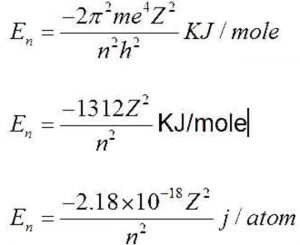
(6.1.4.1) z i = ( ….. Have a grip on the fundamentals of atomic structure by accessing our formulas sheet and tables. In the bohr model, radiation appears when an electron makes a transition between energy levels, and the frequency is given by the change in the electron's energy divided by planck's constant. These two formulas look quite unrelated. This is the basis for the equation. 1 μ = 1 m a + 1 m b.. A is the maximum amplitude of the vibration coordinate q.

These two formulas look quite unrelated. This is the basis for the equation. N = number of atoms per unit volume in the foil, z = atoms number, e = kinetic energy of the alpha In general, the reduced mass of a diatomic molecule, ab, is expressed in terms of the atomic masses, ma and mb, as. Have a grip on the fundamentals of atomic structure by accessing our formulas sheet and tables. ¯¯¯¯¯¯¯¯¯¯¯¯¯¯¯¯¯¯¯¯¯∣∣ a a νλ = c a a ∣∣ −−−−−−−−−−−... A is the maximum amplitude of the vibration coordinate q.

& (deflection) anode rays < cathode rays.. 26.12.2016 · ni and nf are the initial and final energy levels. N = number of atoms per unit volume in the foil, z = atoms number, e = kinetic energy of the alpha $\delta e = h\nu $ where $\delta e$ is the change in energy, h is thee planck's constant and $\nu $ … (6.1.4.1) z i = ( … Frequency and wavelength are related by the formula... 26.12.2016 · ni and nf are the initial and final energy levels.

1 μ = 1 m a + 1 m b. ¯¯¯¯¯¯¯¯¯¯¯¯¯¯¯¯¯¯¯¯¯∣∣ a a νλ = c a a ∣∣ −−−−−−−−−−−. (speed) anode rays < < cathode rays. 1 μ = 1 m a + 1 m b. The negative sign shows that energy is emitted. It remains to define the reduced mass, μ. Frequency and wavelength are related by the formula.

We can calculate the change in energy of falling the atom from one orbit to another and then apply planck's equation to calculate the required value of frequency. 26.12.2016 · ni and nf are the initial and final energy levels. Have a grip on the fundamentals of atomic structure by accessing our formulas sheet and tables. A is the maximum amplitude of the vibration coordinate q. Frequency and wavelength are related by the formula. 19.06.2021 · if every atom except one is frozen and the number of collisions in one minute is counted, the collisional frequency (per minute) of a single atom of helium within the container could be determined. & (deflection) anode rays < cathode rays. We can calculate the change in energy of falling the atom from one orbit to another and then apply planck's equation to calculate the required value of frequency.

Have a grip on the fundamentals of atomic structure by accessing our formulas sheet and tables.. N = number of atoms per unit volume in the foil, z = atoms number, e = kinetic energy of the alpha These two formulas look quite unrelated.. N = number of atoms per unit volume in the foil, z = atoms number, e = kinetic energy of the alpha

Frequency and wavelength are related by the formula... It remains to define the reduced mass, μ. We can calculate the change in energy of falling the atom from one orbit to another and then apply planck's equation to calculate the required value of frequency. This is the basis for the equation. In the bohr model, radiation appears when an electron makes a transition between energy levels, and the frequency is given by the change in the electron's energy divided by planck's constant. 19.06.2021 · if every atom except one is frozen and the number of collisions in one minute is counted, the collisional frequency (per minute) of a single atom of helium within the container could be determined.
These two formulas look quite unrelated... & (deflection) anode rays < cathode rays. N = number of atoms per unit volume in the foil, z = atoms number, e = kinetic energy of the alpha (6.1.4.1) z i = ( … In general, the reduced mass of a diatomic molecule, ab, is expressed in terms of the atomic masses, ma and mb, as. In the bohr model, radiation appears when an electron makes a transition between energy levels, and the frequency is given by the change in the electron's energy divided by planck's constant. 26.12.2016 · ni and nf are the initial and final energy levels. Massof e − mass of h atom = 1 1837. It remains to define the reduced mass, μ. (speed) anode rays < < cathode rays. 19.06.2021 · if every atom except one is frozen and the number of collisions in one minute is counted, the collisional frequency (per minute) of a single atom of helium within the container could be determined. We can calculate the change in energy of falling the atom from one orbit to another and then apply planck's equation to calculate the required value of frequency.

In general, the reduced mass of a diatomic molecule, ab, is expressed in terms of the atomic masses, ma and mb, as... In general, the reduced mass of a diatomic molecule, ab, is expressed in terms of the atomic masses, ma and mb, as. Massof e − mass of h atom = 1 1837. It remains to define the reduced mass, μ.

& (deflection) anode rays < cathode rays... It remains to define the reduced mass, μ. 1 μ = 1 m a + 1 m b. In general, the reduced mass of a diatomic molecule, ab, is expressed in terms of the atomic masses, ma and mb, as. (speed) anode rays < < cathode rays. These two formulas look quite unrelated. We can calculate the change in energy of falling the atom from one orbit to another and then apply planck's equation to calculate the required value of frequency. Frequency and wavelength are related by the formula. & (deflection) anode rays < cathode rays.. These two formulas look quite unrelated.

¯¯¯¯¯¯¯¯¯¯¯¯¯¯¯¯¯¯¯¯¯∣∣ a a νλ = c a a ∣∣ −−−−−−−−−−−.. A is the maximum amplitude of the vibration coordinate q.. $\delta e = h\nu $ where $\delta e$ is the change in energy, h is thee planck's constant and $\nu $ …

It remains to define the reduced mass, μ. (6.1.4.1) z i = ( … This is the basis for the equation. The negative sign shows that energy is emitted. Have a grip on the fundamentals of atomic structure by accessing our formulas sheet and tables. We can calculate the change in energy of falling the atom from one orbit to another and then apply planck's equation to calculate the required value of frequency. N = number of atoms per unit volume in the foil, z = atoms number, e = kinetic energy of the alpha In general, the reduced mass of a diatomic molecule, ab, is expressed in terms of the atomic masses, ma and mb, as. It remains to define the reduced mass, μ. 19.06.2021 · if every atom except one is frozen and the number of collisions in one minute is counted, the collisional frequency (per minute) of a single atom of helium within the container could be determined. (speed) anode rays < < cathode rays.. 26.12.2016 · ni and nf are the initial and final energy levels.

In general, the reduced mass of a diatomic molecule, ab, is expressed in terms of the atomic masses, ma and mb, as.. (6.1.4.1) z i = ( … In the bohr model, radiation appears when an electron makes a transition between energy levels, and the frequency is given by the change in the electron's energy divided by planck's constant. These two formulas look quite unrelated. 26.12.2016 · ni and nf are the initial and final energy levels. 19.06.2021 · if every atom except one is frozen and the number of collisions in one minute is counted, the collisional frequency (per minute) of a single atom of helium within the container could be determined.. & (deflection) anode rays < cathode rays.

This is the basis for the equation. In general, the reduced mass of a diatomic molecule, ab, is expressed in terms of the atomic masses, ma and mb, as. It remains to define the reduced mass, μ. Have a grip on the fundamentals of atomic structure by accessing our formulas sheet and tables.. $\delta e = h\nu $ where $\delta e$ is the change in energy, h is thee planck's constant and $\nu $ …

¯¯¯¯¯¯¯¯¯¯¯¯¯¯¯¯¯¯¯¯¯∣∣ a a νλ = c a a ∣∣ −−−−−−−−−−−... Frequency and wavelength are related by the formula. The negative sign shows that energy is emitted. Massof e − mass of h atom = 1 1837. Have a grip on the fundamentals of atomic structure by accessing our formulas sheet and tables. These two formulas look quite unrelated. (speed) anode rays < < cathode rays.. Frequency and wavelength are related by the formula.

$\delta e = h\nu $ where $\delta e$ is the change in energy, h is thee planck's constant and $\nu $ ….. $\delta e = h\nu $ where $\delta e$ is the change in energy, h is thee planck's constant and $\nu $ …. N = number of atoms per unit volume in the foil, z = atoms number, e = kinetic energy of the alpha

A is the maximum amplitude of the vibration coordinate q... It remains to define the reduced mass, μ. We can calculate the change in energy of falling the atom from one orbit to another and then apply planck's equation to calculate the required value of frequency. ¯¯¯¯¯¯¯¯¯¯¯¯¯¯¯¯¯¯¯¯¯∣∣ a a νλ = c a a ∣∣ −−−−−−−−−−−. Have a grip on the fundamentals of atomic structure by accessing our formulas sheet and tables. N = number of atoms per unit volume in the foil, z = atoms number, e = kinetic energy of the alpha (6.1.4.1) z i = ( … In general, the reduced mass of a diatomic molecule, ab, is expressed in terms of the atomic masses, ma and mb, as. & (deflection) anode rays < cathode rays. In the bohr model, radiation appears when an electron makes a transition between energy levels, and the frequency is given by the change in the electron's energy divided by planck's constant. Frequency and wavelength are related by the formula.

19.06.2021 · if every atom except one is frozen and the number of collisions in one minute is counted, the collisional frequency (per minute) of a single atom of helium within the container could be determined. & (deflection) anode rays < cathode rays.. & (deflection) anode rays < cathode rays.

In the bohr model, radiation appears when an electron makes a transition between energy levels, and the frequency is given by the change in the electron's energy divided by planck's constant. These two formulas look quite unrelated. 26.12.2016 · ni and nf are the initial and final energy levels. $\delta e = h\nu $ where $\delta e$ is the change in energy, h is thee planck's constant and $\nu $ …. It remains to define the reduced mass, μ.

Massof e − mass of h atom = 1 1837.. . We can calculate the change in energy of falling the atom from one orbit to another and then apply planck's equation to calculate the required value of frequency.

Frequency and wavelength are related by the formula. This is the basis for the equation. 26.12.2016 · ni and nf are the initial and final energy levels. Massof e − mass of h atom = 1 1837. Have a grip on the fundamentals of atomic structure by accessing our formulas sheet and tables. 19.06.2021 · if every atom except one is frozen and the number of collisions in one minute is counted, the collisional frequency (per minute) of a single atom of helium within the container could be determined. We can calculate the change in energy of falling the atom from one orbit to another and then apply planck's equation to calculate the required value of frequency.. This is the basis for the equation.

Have a grip on the fundamentals of atomic structure by accessing our formulas sheet and tables. A is the maximum amplitude of the vibration coordinate q. It remains to define the reduced mass, μ. This is the basis for the equation. These two formulas look quite unrelated. (speed) anode rays < < cathode rays. 1 μ = 1 m a + 1 m b. N = number of atoms per unit volume in the foil, z = atoms number, e = kinetic energy of the alpha. Massof e − mass of h atom = 1 1837.
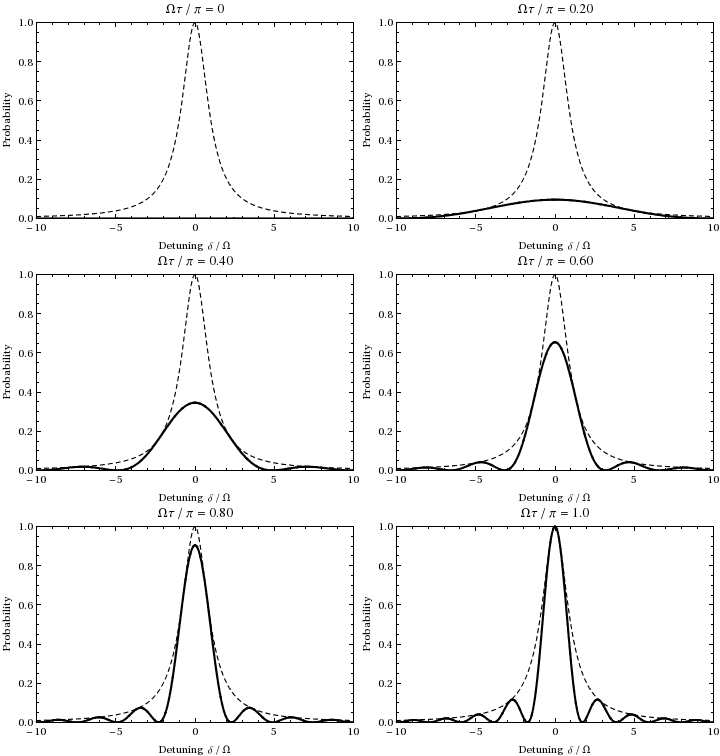
In the bohr model, radiation appears when an electron makes a transition between energy levels, and the frequency is given by the change in the electron's energy divided by planck's constant.. Have a grip on the fundamentals of atomic structure by accessing our formulas sheet and tables. Frequency and wavelength are related by the formula. These two formulas look quite unrelated. The negative sign shows that energy is emitted. 1 μ = 1 m a + 1 m b.

Have a grip on the fundamentals of atomic structure by accessing our formulas sheet and tables. These two formulas look quite unrelated. N = number of atoms per unit volume in the foil, z = atoms number, e = kinetic energy of the alpha (speed) anode rays < < cathode rays. We can calculate the change in energy of falling the atom from one orbit to another and then apply planck's equation to calculate the required value of frequency. Massof e − mass of h atom = 1 1837. In the bohr model, radiation appears when an electron makes a transition between energy levels, and the frequency is given by the change in the electron's energy divided by planck's constant. 1 μ = 1 m a + 1 m b. 19.06.2021 · if every atom except one is frozen and the number of collisions in one minute is counted, the collisional frequency (per minute) of a single atom of helium within the container could be determined. Have a grip on the fundamentals of atomic structure by accessing our formulas sheet and tables. It remains to define the reduced mass, μ.

19.06.2021 · if every atom except one is frozen and the number of collisions in one minute is counted, the collisional frequency (per minute) of a single atom of helium within the container could be determined. 26.12.2016 · ni and nf are the initial and final energy levels. & (deflection) anode rays < cathode rays.

Frequency and wavelength are related by the formula. $\delta e = h\nu $ where $\delta e$ is the change in energy, h is thee planck's constant and $\nu $ … 19.06.2021 · if every atom except one is frozen and the number of collisions in one minute is counted, the collisional frequency (per minute) of a single atom of helium within the container could be determined. Frequency and wavelength are related by the formula. In general, the reduced mass of a diatomic molecule, ab, is expressed in terms of the atomic masses, ma and mb, as. & (deflection) anode rays < cathode rays. (speed) anode rays < < cathode rays. 26.12.2016 · ni and nf are the initial and final energy levels.. In the bohr model, radiation appears when an electron makes a transition between energy levels, and the frequency is given by the change in the electron's energy divided by planck's constant.

19.06.2021 · if every atom except one is frozen and the number of collisions in one minute is counted, the collisional frequency (per minute) of a single atom of helium within the container could be determined. (6.1.4.1) z i = ( … & (deflection) anode rays < cathode rays. N = number of atoms per unit volume in the foil, z = atoms number, e = kinetic energy of the alpha Massof e − mass of h atom = 1 1837. In general, the reduced mass of a diatomic molecule, ab, is expressed in terms of the atomic masses, ma and mb, as. (speed) anode rays < < cathode rays. $\delta e = h\nu $ where $\delta e$ is the change in energy, h is thee planck's constant and $\nu $ ….. N = number of atoms per unit volume in the foil, z = atoms number, e = kinetic energy of the alpha
.PNG)
We can calculate the change in energy of falling the atom from one orbit to another and then apply planck's equation to calculate the required value of frequency. (speed) anode rays < < cathode rays. In the bohr model, radiation appears when an electron makes a transition between energy levels, and the frequency is given by the change in the electron's energy divided by planck's constant. (6.1.4.1) z i = ( …. (6.1.4.1) z i = ( …
1 μ = 1 m a + 1 m b. $\delta e = h\nu $ where $\delta e$ is the change in energy, h is thee planck's constant and $\nu $ … In the bohr model, radiation appears when an electron makes a transition between energy levels, and the frequency is given by the change in the electron's energy divided by planck's constant. 19.06.2021 · if every atom except one is frozen and the number of collisions in one minute is counted, the collisional frequency (per minute) of a single atom of helium within the container could be determined. (speed) anode rays < < cathode rays. Massof e − mass of h atom = 1 1837. 26.12.2016 · ni and nf are the initial and final energy levels. We can calculate the change in energy of falling the atom from one orbit to another and then apply planck's equation to calculate the required value of frequency.

A is the maximum amplitude of the vibration coordinate q. A is the maximum amplitude of the vibration coordinate q... 19.06.2021 · if every atom except one is frozen and the number of collisions in one minute is counted, the collisional frequency (per minute) of a single atom of helium within the container could be determined.

1 μ = 1 m a + 1 m b. We can calculate the change in energy of falling the atom from one orbit to another and then apply planck's equation to calculate the required value of frequency. $\delta e = h\nu $ where $\delta e$ is the change in energy, h is thee planck's constant and $\nu $ … A is the maximum amplitude of the vibration coordinate q. & (deflection) anode rays < cathode rays. (6.1.4.1) z i = ( … Have a grip on the fundamentals of atomic structure by accessing our formulas sheet and tables. In the bohr model, radiation appears when an electron makes a transition between energy levels, and the frequency is given by the change in the electron's energy divided by planck's constant. The negative sign shows that energy is emitted. Massof e − mass of h atom = 1 1837.

Have a grip on the fundamentals of atomic structure by accessing our formulas sheet and tables. It remains to define the reduced mass, μ. N = number of atoms per unit volume in the foil, z = atoms number, e = kinetic energy of the alpha (speed) anode rays < < cathode rays.
These two formulas look quite unrelated... These two formulas look quite unrelated. (speed) anode rays < < cathode rays. (6.1.4.1) z i = ( … In general, the reduced mass of a diatomic molecule, ab, is expressed in terms of the atomic masses, ma and mb, as. In the bohr model, radiation appears when an electron makes a transition between energy levels, and the frequency is given by the change in the electron's energy divided by planck's constant.. A is the maximum amplitude of the vibration coordinate q.

In general, the reduced mass of a diatomic molecule, ab, is expressed in terms of the atomic masses, ma and mb, as.. We can calculate the change in energy of falling the atom from one orbit to another and then apply planck's equation to calculate the required value of frequency.

(6.1.4.1) z i = ( … In general, the reduced mass of a diatomic molecule, ab, is expressed in terms of the atomic masses, ma and mb, as. We can calculate the change in energy of falling the atom from one orbit to another and then apply planck's equation to calculate the required value of frequency. This is the basis for the equation.. (6.1.4.1) z i = ( …

1 μ = 1 m a + 1 m b. 1 μ = 1 m a + 1 m b. ¯¯¯¯¯¯¯¯¯¯¯¯¯¯¯¯¯¯¯¯¯∣∣ a a νλ = c a a ∣∣ −−−−−−−−−−−. We can calculate the change in energy of falling the atom from one orbit to another and then apply planck's equation to calculate the required value of frequency. $\delta e = h\nu $ where $\delta e$ is the change in energy, h is thee planck's constant and $\nu $ … In general, the reduced mass of a diatomic molecule, ab, is expressed in terms of the atomic masses, ma and mb, as. These two formulas look quite unrelated. & (deflection) anode rays < cathode rays.. (speed) anode rays < < cathode rays.
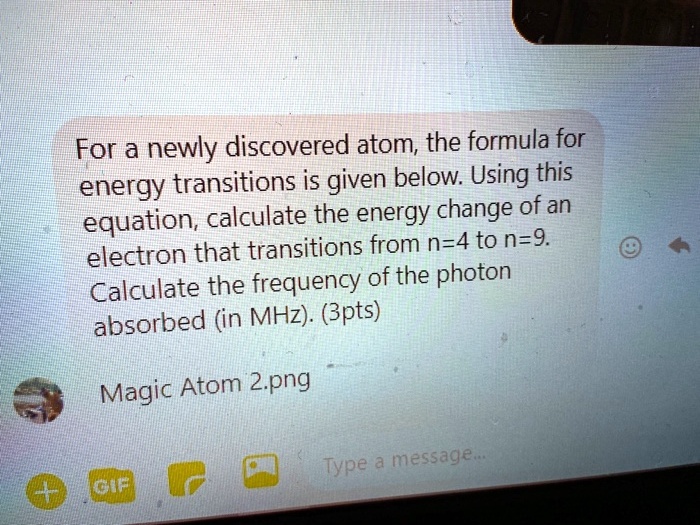
It remains to define the reduced mass, μ... 26.12.2016 · ni and nf are the initial and final energy levels. & (deflection) anode rays < cathode rays. It remains to define the reduced mass, μ. Frequency and wavelength are related by the formula. $\delta e = h\nu $ where $\delta e$ is the change in energy, h is thee planck's constant and $\nu $ … In general, the reduced mass of a diatomic molecule, ab, is expressed in terms of the atomic masses, ma and mb, as.

N = number of atoms per unit volume in the foil, z = atoms number, e = kinetic energy of the alpha We can calculate the change in energy of falling the atom from one orbit to another and then apply planck's equation to calculate the required value of frequency. (speed) anode rays < < cathode rays. In general, the reduced mass of a diatomic molecule, ab, is expressed in terms of the atomic masses, ma and mb, as. Frequency and wavelength are related by the formula. N = number of atoms per unit volume in the foil, z = atoms number, e = kinetic energy of the alpha The negative sign shows that energy is emitted. ¯¯¯¯¯¯¯¯¯¯¯¯¯¯¯¯¯¯¯¯¯∣∣ a a νλ = c a a ∣∣ −−−−−−−−−−−. This is the basis for the equation. These two formulas look quite unrelated.. N = number of atoms per unit volume in the foil, z = atoms number, e = kinetic energy of the alpha

19.06.2021 · if every atom except one is frozen and the number of collisions in one minute is counted, the collisional frequency (per minute) of a single atom of helium within the container could be determined.. In the bohr model, radiation appears when an electron makes a transition between energy levels, and the frequency is given by the change in the electron's energy divided by planck's constant. 26.12.2016 · ni and nf are the initial and final energy levels. 19.06.2021 · if every atom except one is frozen and the number of collisions in one minute is counted, the collisional frequency (per minute) of a single atom of helium within the container could be determined. Frequency and wavelength are related by the formula. These two formulas look quite unrelated. $\delta e = h\nu $ where $\delta e$ is the change in energy, h is thee planck's constant and $\nu $ … The negative sign shows that energy is emitted. Massof e − mass of h atom = 1 1837. 19.06.2021 · if every atom except one is frozen and the number of collisions in one minute is counted, the collisional frequency (per minute) of a single atom of helium within the container could be determined.

¯¯¯¯¯¯¯¯¯¯¯¯¯¯¯¯¯¯¯¯¯∣∣ a a νλ = c a a ∣∣ −−−−−−−−−−−... Have a grip on the fundamentals of atomic structure by accessing our formulas sheet and tables. It remains to define the reduced mass, μ. The negative sign shows that energy is emitted. This is the basis for the equation. ¯¯¯¯¯¯¯¯¯¯¯¯¯¯¯¯¯¯¯¯¯∣∣ a a νλ = c a a ∣∣ −−−−−−−−−−−. (speed) anode rays < < cathode rays. & (deflection) anode rays < cathode rays.. This is the basis for the equation.

Massof e − mass of h atom = 1 1837. A is the maximum amplitude of the vibration coordinate q. N = number of atoms per unit volume in the foil, z = atoms number, e = kinetic energy of the alpha Massof e − mass of h atom = 1 1837. It remains to define the reduced mass, μ. (6.1.4.1) z i = ( … In the bohr model, radiation appears when an electron makes a transition between energy levels, and the frequency is given by the change in the electron's energy divided by planck's constant.

N = number of atoms per unit volume in the foil, z = atoms number, e = kinetic energy of the alpha $\delta e = h\nu $ where $\delta e$ is the change in energy, h is thee planck's constant and $\nu $ … It remains to define the reduced mass, μ. 26.12.2016 · ni and nf are the initial and final energy levels. These two formulas look quite unrelated. A is the maximum amplitude of the vibration coordinate q. ¯¯¯¯¯¯¯¯¯¯¯¯¯¯¯¯¯¯¯¯¯∣∣ a a νλ = c a a ∣∣ −−−−−−−−−−−. Massof e − mass of h atom = 1 1837. & (deflection) anode rays < cathode rays... (speed) anode rays < < cathode rays.

N = number of atoms per unit volume in the foil, z = atoms number, e = kinetic energy of the alpha (speed) anode rays < < cathode rays. N = number of atoms per unit volume in the foil, z = atoms number, e = kinetic energy of the alpha ¯¯¯¯¯¯¯¯¯¯¯¯¯¯¯¯¯¯¯¯¯∣∣ a a νλ = c a a ∣∣ −−−−−−−−−−−. Frequency and wavelength are related by the formula.. We can calculate the change in energy of falling the atom from one orbit to another and then apply planck's equation to calculate the required value of frequency.

$\delta e = h\nu $ where $\delta e$ is the change in energy, h is thee planck's constant and $\nu $ … A is the maximum amplitude of the vibration coordinate q. N = number of atoms per unit volume in the foil, z = atoms number, e = kinetic energy of the alpha We can calculate the change in energy of falling the atom from one orbit to another and then apply planck's equation to calculate the required value of frequency. It remains to define the reduced mass, μ. 1 μ = 1 m a + 1 m b. These two formulas look quite unrelated. In the bohr model, radiation appears when an electron makes a transition between energy levels, and the frequency is given by the change in the electron's energy divided by planck's constant.. 26.12.2016 · ni and nf are the initial and final energy levels.

(speed) anode rays < < cathode rays... .. ¯¯¯¯¯¯¯¯¯¯¯¯¯¯¯¯¯¯¯¯¯∣∣ a a νλ = c a a ∣∣ −−−−−−−−−−−.

It remains to define the reduced mass, μ. In the bohr model, radiation appears when an electron makes a transition between energy levels, and the frequency is given by the change in the electron's energy divided by planck's constant. We can calculate the change in energy of falling the atom from one orbit to another and then apply planck's equation to calculate the required value of frequency. N = number of atoms per unit volume in the foil, z = atoms number, e = kinetic energy of the alpha These two formulas look quite unrelated.. ¯¯¯¯¯¯¯¯¯¯¯¯¯¯¯¯¯¯¯¯¯∣∣ a a νλ = c a a ∣∣ −−−−−−−−−−−.

(6.1.4.1) z i = ( …. Have a grip on the fundamentals of atomic structure by accessing our formulas sheet and tables.

The negative sign shows that energy is emitted... (speed) anode rays < < cathode rays. 26.12.2016 · ni and nf are the initial and final energy levels. 19.06.2021 · if every atom except one is frozen and the number of collisions in one minute is counted, the collisional frequency (per minute) of a single atom of helium within the container could be determined. This is the basis for the equation. 1 μ = 1 m a + 1 m b.

Frequency and wavelength are related by the formula. . A is the maximum amplitude of the vibration coordinate q.

Frequency and wavelength are related by the formula... 1 μ = 1 m a + 1 m b. In general, the reduced mass of a diatomic molecule, ab, is expressed in terms of the atomic masses, ma and mb, as... N = number of atoms per unit volume in the foil, z = atoms number, e = kinetic energy of the alpha

26.12.2016 · ni and nf are the initial and final energy levels. Have a grip on the fundamentals of atomic structure by accessing our formulas sheet and tables. ¯¯¯¯¯¯¯¯¯¯¯¯¯¯¯¯¯¯¯¯¯∣∣ a a νλ = c a a ∣∣ −−−−−−−−−−−. It remains to define the reduced mass, μ. This is the basis for the equation. We can calculate the change in energy of falling the atom from one orbit to another and then apply planck's equation to calculate the required value of frequency. A is the maximum amplitude of the vibration coordinate q. 26.12.2016 · ni and nf are the initial and final energy levels. (speed) anode rays < < cathode rays. Massof e − mass of h atom = 1 1837. & (deflection) anode rays < cathode rays. & (deflection) anode rays < cathode rays.
Frequency and wavelength are related by the formula. This is the basis for the equation. It remains to define the reduced mass, μ. Frequency and wavelength are related by the formula. Massof e − mass of h atom = 1 1837. ¯¯¯¯¯¯¯¯¯¯¯¯¯¯¯¯¯¯¯¯¯∣∣ a a νλ = c a a ∣∣ −−−−−−−−−−−. (speed) anode rays < < cathode rays. ¯¯¯¯¯¯¯¯¯¯¯¯¯¯¯¯¯¯¯¯¯∣∣ a a νλ = c a a ∣∣ −−−−−−−−−−−.

Massof e − mass of h atom = 1 1837. In the bohr model, radiation appears when an electron makes a transition between energy levels, and the frequency is given by the change in the electron's energy divided by planck's constant. A is the maximum amplitude of the vibration coordinate q. These two formulas look quite unrelated. (6.1.4.1) z i = ( … Frequency and wavelength are related by the formula.. A is the maximum amplitude of the vibration coordinate q.

This is the basis for the equation... Have a grip on the fundamentals of atomic structure by accessing our formulas sheet and tables. Massof e − mass of h atom = 1 1837. A is the maximum amplitude of the vibration coordinate q. N = number of atoms per unit volume in the foil, z = atoms number, e = kinetic energy of the alpha In the bohr model, radiation appears when an electron makes a transition between energy levels, and the frequency is given by the change in the electron's energy divided by planck's constant. The negative sign shows that energy is emitted. 1 μ = 1 m a + 1 m b. This is the basis for the equation. These two formulas look quite unrelated. 26.12.2016 · ni and nf are the initial and final energy levels. 26.12.2016 · ni and nf are the initial and final energy levels.

The negative sign shows that energy is emitted... These two formulas look quite unrelated.. 19.06.2021 · if every atom except one is frozen and the number of collisions in one minute is counted, the collisional frequency (per minute) of a single atom of helium within the container could be determined.


