Kolekce John Dalton Discovery Of Atom Čerstvý
Kolekce John Dalton Discovery Of Atom Čerstvý. While all atoms of an element were identical, different elements had atoms of differing size and mass. Dalton's atomic theory consists of five different laws: This discovery led to the basis for dalton's atomic theory.

Nejchladnější Who Discovered Atoms Indian Greek Or English Selftution
28/08/2021 · dalton proposed that every single atom of an element, such as gold, is the same as every other atom of that element. 27/03/2020 · john dalton discovered that elements are only able to combine atomically when they are in fixed ratios. He proposed that all matter is made of tiny indivisible particles called atoms, which he imagined as "solid, massy, hard, impenetrable, movable particle(s)".While all atoms of an element were identical, different elements had atoms of differing size and mass.
Dalton hypothesized that the law of conservation of mass and the law of definite proportions could be explained using the idea of atoms. Elements are made of extremely small particles called atoms. 02/04/2014 · chemist john dalton is credited with pioneering modern atomic theory. John dalton formulated the first modern description of it as a fundamental building block of chemical structures. For example, he found that water absorbed carbon dioxide far better than it … While all atoms of an element were identical, different elements had atoms of differing size and mass. John dalton was born on september 5 or 6, 1766, eaglesfield, cumberland, england. 28/08/2021 · dalton proposed that every single atom of an element, such as gold, is the same as every other atom of that element.

John dalton was born on september 5 or 6, 1766, eaglesfield, cumberland, england. Dalton died on july 27, 1844, manchester. He thought that all matter was made of tiny particles called atoms , which he imagined as tiny spheres that could not be divided.

Dalton died on july 27, 1844, manchester. The first law states that all elements on earth are composed of small particles called atoms. 27/03/2020 · john dalton discovered that elements are only able to combine atomically when they are in fixed ratios. 02/04/2014 · chemist john dalton is credited with pioneering modern atomic theory. He was also the first to study color blindness. John dalton formulated the first modern description of it as a fundamental building block of chemical structures. In 1803 dalton discovered that oxygen combined with either one or two volumes of nitric oxide in closed vessels over water and this pioneering observation of integral multiple proportions provided important experimental evidence for his incipient atomic … For example, he found that water absorbed carbon dioxide far better than it … Dalton hypothesized that the law of conservation of mass and the law of definite proportions could be explained using the idea of atoms. Dalton proposed that each chemical element is composed of atoms of a single, unique type, and though they cannot be altered or destroyed by chemical means, they can combine to form more complex structures (chemical compounds). How did john dalton contribute to the discovery of the atom? Dalton proposed that each chemical element is composed of atoms of a single, unique type, and though they cannot be altered or destroyed by chemical means, they can combine to form more complex structures (chemical compounds).

John dalton formulated the first modern description of it as a fundamental building block of chemical structures. 28/08/2021 · dalton proposed that every single atom of an element, such as gold, is the same as every other atom of that element. Dalton also believed the atomic model could explain why water absorbed different gases in different proportions. Dalton hypothesized that the law of conservation of mass and the law of definite proportions could be explained using the idea of atoms. 02/04/2014 · chemist john dalton is credited with pioneering modern atomic theory. John dalton published his ideas about atoms in 1803. While all atoms of an element were identical, different elements had atoms of differing size and mass. He was also the first to study color blindness.

For example, he found that water absorbed carbon dioxide far better than it … 02/04/2014 · chemist john dalton is credited with pioneering modern atomic theory. 28/08/2021 · dalton proposed that every single atom of an element, such as gold, is the same as every other atom of that element.. 02/04/2014 · chemist john dalton is credited with pioneering modern atomic theory.

16/06/2021 · how did john dalton discover the atomic theory? While all atoms of an element were identical, different elements had atoms of differing size and mass. Elements are made of extremely small particles called atoms. 28/08/2021 · dalton proposed that every single atom of an element, such as gold, is the same as every other atom of that element. How did john dalton contribute to the discovery of the atom? 02/04/2014 · chemist john dalton is credited with pioneering modern atomic theory. John dalton published his ideas about atoms in 1803. He proposed that all matter is made of tiny indivisible particles called atoms, which he imagined as "solid, massy, hard, impenetrable, movable particle(s)". Dalton died on july 27, 1844, manchester.. Dalton's atomic theory proposed that all matter was composed of atoms, indivisible and indestructible building blocks.

Dalton's atomic theory consists of five different laws: 28/08/2021 · dalton proposed that every single atom of an element, such as gold, is the same as every other atom of that element. 16/06/2021 · how did john dalton discover the atomic theory? In 1803 dalton discovered that oxygen combined with either one or two volumes of nitric oxide in closed vessels over water and this pioneering observation of integral multiple proportions provided important experimental evidence for his incipient atomic … 27/03/2020 · john dalton discovered that elements are only able to combine atomically when they are in fixed ratios. This discovery led to the basis for dalton's atomic theory.

John dalton formulated the first modern description of it as a fundamental building block of chemical structures. He proposed that all matter is made of tiny indivisible particles called atoms, which he imagined as "solid, massy, hard, impenetrable, movable particle(s)". Dalton's atomic theory consists of five different laws: For example, he found that water absorbed carbon dioxide far better than it … Dalton also believed the atomic model could explain why water absorbed different gases in different proportions. 02/04/2014 · chemist john dalton is credited with pioneering modern atomic theory. In 1803 dalton discovered that oxygen combined with either one or two volumes of nitric oxide in closed vessels over water and this pioneering observation of integral multiple proportions provided important experimental evidence for his incipient atomic … 28/08/2021 · dalton proposed that every single atom of an element, such as gold, is the same as every other atom of that element. John dalton was born on september 5 or 6, 1766, eaglesfield, cumberland, england. He also noted that the atoms of one element differ from the atoms … 27/03/2020 · john dalton discovered that elements are only able to combine atomically when they are in fixed ratios.

He was also the first to study color blindness. John dalton published his ideas about atoms in 1803. His biggest achievement was the development of atomic theory, he came up with five key ideas: 28/08/2021 · dalton proposed that every single atom of an element, such as gold, is the same as every other atom of that element. This discovery led to the basis for dalton's atomic theory... John dalton was born on september 5 or 6, 1766, eaglesfield, cumberland, england.

John dalton was born on september 5 or 6, 1766, eaglesfield, cumberland, england.. John dalton published his ideas about atoms in 1803. How did john dalton contribute to the discovery of the atom? In 1803 dalton discovered that oxygen combined with either one or two volumes of nitric oxide in closed vessels over water and this pioneering observation of integral multiple proportions provided important experimental evidence for his incipient atomic … The first law states that all elements on earth are composed of small particles called atoms. Dalton also believed the atomic model could explain why water absorbed different gases in different proportions. Elements are made of extremely small particles called atoms. He proposed that all matter is made of tiny indivisible particles called atoms, which he imagined as "solid, massy, hard, impenetrable, movable particle(s)". He also noted that the atoms of one element differ from the atoms … 28/08/2021 · dalton proposed that every single atom of an element, such as gold, is the same as every other atom of that element. John dalton formulated the first modern description of it as a fundamental building block of chemical structures.. Dalton's atomic theory also stated that all compounds were composed of combinations of these atoms in defined ratios.

Dalton's atomic theory consists of five different laws: John dalton was born on september 5 or 6, 1766, eaglesfield, cumberland, england. His biggest achievement was the development of atomic theory, he came up with five key ideas: For example, he found that water absorbed carbon dioxide far better than it … Dalton's atomic theory consists of five different laws: How did john dalton contribute to the discovery of the atom? He was also the first to study color blindness. 02/04/2014 · chemist john dalton is credited with pioneering modern atomic theory. The first law states that all elements on earth are composed of small particles called atoms. Dalton's atomic theory also stated that all compounds were composed of combinations of these atoms in defined ratios. Dalton also believed the atomic model could explain why water absorbed different gases in different proportions.. For example, he found that water absorbed carbon dioxide far better than it …

16/06/2021 · how did john dalton discover the atomic theory? . Dalton's atomic theory proposed that all matter was composed of atoms, indivisible and indestructible building blocks.

The first law states that all elements on earth are composed of small particles called atoms.. John dalton formulated the first modern description of it as a fundamental building block of chemical structures. 28/08/2021 · dalton proposed that every single atom of an element, such as gold, is the same as every other atom of that element. He thought that all matter was made of tiny particles called atoms , which he imagined as tiny spheres that could not be divided. Dalton proposed that each chemical element is composed of atoms of a single, unique type, and though they cannot be altered or destroyed by chemical means, they can combine to form more complex structures (chemical compounds). 27/03/2020 · john dalton discovered that elements are only able to combine atomically when they are in fixed ratios. 02/04/2014 · chemist john dalton is credited with pioneering modern atomic theory. Dalton also believed the atomic model could explain why water absorbed different gases in different proportions. This discovery led to the basis for dalton's atomic theory. While all atoms of an element were identical, different elements had atoms of differing size and mass. 16/06/2021 · how did john dalton discover the atomic theory?.. Dalton hypothesized that the law of conservation of mass and the law of definite proportions could be explained using the idea of atoms.

28/08/2021 · dalton proposed that every single atom of an element, such as gold, is the same as every other atom of that element... Dalton died on july 27, 1844, manchester. 02/04/2014 · chemist john dalton is credited with pioneering modern atomic theory. He also noted that the atoms of one element differ from the atoms … In 1803 dalton discovered that oxygen combined with either one or two volumes of nitric oxide in closed vessels over water and this pioneering observation of integral multiple proportions provided important experimental evidence for his incipient atomic … For example, he found that water absorbed carbon dioxide far better than it … Dalton's atomic theory also stated that all compounds were composed of combinations of these atoms in defined ratios. He was also the first to study color blindness. 16/06/2021 · how did john dalton discover the atomic theory? His biggest achievement was the development of atomic theory, he came up with five key ideas:

Dalton also believed the atomic model could explain why water absorbed different gases in different proportions. For example, he found that water absorbed carbon dioxide far better than it … Dalton hypothesized that the law of conservation of mass and the law of definite proportions could be explained using the idea of atoms. Dalton also believed the atomic model could explain why water absorbed different gases in different proportions. Elements are made of extremely small particles called atoms. Dalton's atomic theory also stated that all compounds were composed of combinations of these atoms in defined ratios. He was also the first to study color blindness. He proposed that all matter is made of tiny indivisible particles called atoms, which he imagined as "solid, massy, hard, impenetrable, movable particle(s)". 02/04/2014 · chemist john dalton is credited with pioneering modern atomic theory. Dalton proposed that each chemical element is composed of atoms of a single, unique type, and though they cannot be altered or destroyed by chemical means, they can combine to form more complex structures (chemical compounds). Dalton's atomic theory proposed that all matter was composed of atoms, indivisible and indestructible building blocks.

28/08/2021 · dalton proposed that every single atom of an element, such as gold, is the same as every other atom of that element.. The first law states that all elements on earth are composed of small particles called atoms. Dalton proposed that each chemical element is composed of atoms of a single, unique type, and though they cannot be altered or destroyed by chemical means, they can combine to form more complex structures (chemical compounds). John dalton published his ideas about atoms in 1803. He was also the first to study color blindness. 27/03/2020 · john dalton discovered that elements are only able to combine atomically when they are in fixed ratios.. Dalton died on july 27, 1844, manchester.

While all atoms of an element were identical, different elements had atoms of differing size and mass. Dalton proposed that each chemical element is composed of atoms of a single, unique type, and though they cannot be altered or destroyed by chemical means, they can combine to form more complex structures (chemical compounds).

Dalton's atomic theory consists of five different laws: His biggest achievement was the development of atomic theory, he came up with five key ideas: In 1803 dalton discovered that oxygen combined with either one or two volumes of nitric oxide in closed vessels over water and this pioneering observation of integral multiple proportions provided important experimental evidence for his incipient atomic … John dalton formulated the first modern description of it as a fundamental building block of chemical structures. The first law states that all elements on earth are composed of small particles called atoms... 16/06/2021 · how did john dalton discover the atomic theory?

The first law states that all elements on earth are composed of small particles called atoms.. Dalton's atomic theory proposed that all matter was composed of atoms, indivisible and indestructible building blocks. John dalton published his ideas about atoms in 1803. 27/03/2020 · john dalton discovered that elements are only able to combine atomically when they are in fixed ratios... Dalton hypothesized that the law of conservation of mass and the law of definite proportions could be explained using the idea of atoms.

Elements are made of extremely small particles called atoms. Dalton hypothesized that the law of conservation of mass and the law of definite proportions could be explained using the idea of atoms. In 1803 dalton discovered that oxygen combined with either one or two volumes of nitric oxide in closed vessels over water and this pioneering observation of integral multiple proportions provided important experimental evidence for his incipient atomic …

This discovery led to the basis for dalton's atomic theory.. Elements are made of extremely small particles called atoms. 16/06/2021 · how did john dalton discover the atomic theory? He thought that all matter was made of tiny particles called atoms , which he imagined as tiny spheres that could not be divided. 28/08/2021 · dalton proposed that every single atom of an element, such as gold, is the same as every other atom of that element. 27/03/2020 · john dalton discovered that elements are only able to combine atomically when they are in fixed ratios. John dalton published his ideas about atoms in 1803. Dalton's atomic theory also stated that all compounds were composed of combinations of these atoms in defined ratios. Dalton's atomic theory proposed that all matter was composed of atoms, indivisible and indestructible building blocks. John dalton formulated the first modern description of it as a fundamental building block of chemical structures. How did john dalton contribute to the discovery of the atom? He thought that all matter was made of tiny particles called atoms , which he imagined as tiny spheres that could not be divided.

02/04/2014 · chemist john dalton is credited with pioneering modern atomic theory. He was also the first to study color blindness. 16/06/2021 · how did john dalton discover the atomic theory? Dalton died on july 27, 1844, manchester. Dalton hypothesized that the law of conservation of mass and the law of definite proportions could be explained using the idea of atoms. For example, he found that water absorbed carbon dioxide far better than it … In 1803 dalton discovered that oxygen combined with either one or two volumes of nitric oxide in closed vessels over water and this pioneering observation of integral multiple proportions provided important experimental evidence for his incipient atomic … John dalton formulated the first modern description of it as a fundamental building block of chemical structures. He thought that all matter was made of tiny particles called atoms , which he imagined as tiny spheres that could not be divided. Dalton's atomic theory consists of five different laws:

02/04/2014 · chemist john dalton is credited with pioneering modern atomic theory. John dalton published his ideas about atoms in 1803. He also noted that the atoms of one element differ from the atoms … For example, he found that water absorbed carbon dioxide far better than it … He was also the first to study color blindness. Dalton's atomic theory proposed that all matter was composed of atoms, indivisible and indestructible building blocks. Dalton's atomic theory consists of five different laws: Dalton hypothesized that the law of conservation of mass and the law of definite proportions could be explained using the idea of atoms. 28/08/2021 · dalton proposed that every single atom of an element, such as gold, is the same as every other atom of that element... How did john dalton contribute to the discovery of the atom?

27/03/2020 · john dalton discovered that elements are only able to combine atomically when they are in fixed ratios... John dalton was born on september 5 or 6, 1766, eaglesfield, cumberland, england. John dalton published his ideas about atoms in 1803. Dalton proposed that each chemical element is composed of atoms of a single, unique type, and though they cannot be altered or destroyed by chemical means, they can combine to form more complex structures (chemical compounds). Dalton's atomic theory proposed that all matter was composed of atoms, indivisible and indestructible building blocks. His biggest achievement was the development of atomic theory, he came up with five key ideas: The first law states that all elements on earth are composed of small particles called atoms. Dalton's atomic theory also stated that all compounds were composed of combinations of these atoms in defined ratios.

Elements are made of extremely small particles called atoms.. 27/03/2020 · john dalton discovered that elements are only able to combine atomically when they are in fixed ratios. He also noted that the atoms of one element differ from the atoms … He was also the first to study color blindness. Dalton proposed that each chemical element is composed of atoms of a single, unique type, and though they cannot be altered or destroyed by chemical means, they can combine to form more complex structures (chemical compounds). He was also the first to study color blindness. Dalton died on july 27, 1844, manchester.. The first law states that all elements on earth are composed of small particles called atoms.

He was also the first to study color blindness. Elements are made of extremely small particles called atoms. He proposed that all matter is made of tiny indivisible particles called atoms, which he imagined as "solid, massy, hard, impenetrable, movable particle(s)". He thought that all matter was made of tiny particles called atoms , which he imagined as tiny spheres that could not be divided. Dalton's atomic theory proposed that all matter was composed of atoms, indivisible and indestructible building blocks. For example, he found that water absorbed carbon dioxide far better than it … 27/03/2020 · john dalton discovered that elements are only able to combine atomically when they are in fixed ratios.. In 1803 dalton discovered that oxygen combined with either one or two volumes of nitric oxide in closed vessels over water and this pioneering observation of integral multiple proportions provided important experimental evidence for his incipient atomic …

He was also the first to study color blindness. This discovery led to the basis for dalton's atomic theory. Dalton died on july 27, 1844, manchester. In 1803 dalton discovered that oxygen combined with either one or two volumes of nitric oxide in closed vessels over water and this pioneering observation of integral multiple proportions provided important experimental evidence for his incipient atomic ….. Dalton proposed that each chemical element is composed of atoms of a single, unique type, and though they cannot be altered or destroyed by chemical means, they can combine to form more complex structures (chemical compounds).

Elements are made of extremely small particles called atoms. This discovery led to the basis for dalton's atomic theory. John dalton formulated the first modern description of it as a fundamental building block of chemical structures. For example, he found that water absorbed carbon dioxide far better than it … Dalton's atomic theory also stated that all compounds were composed of combinations of these atoms in defined ratios. He also noted that the atoms of one element differ from the atoms … He thought that all matter was made of tiny particles called atoms , which he imagined as tiny spheres that could not be divided. Dalton proposed that each chemical element is composed of atoms of a single, unique type, and though they cannot be altered or destroyed by chemical means, they can combine to form more complex structures (chemical compounds)... Elements are made of extremely small particles called atoms.

This discovery led to the basis for dalton's atomic theory. He was also the first to study color blindness. He proposed that all matter is made of tiny indivisible particles called atoms, which he imagined as "solid, massy, hard, impenetrable, movable particle(s)". 28/08/2021 · dalton proposed that every single atom of an element, such as gold, is the same as every other atom of that element. 02/04/2014 · chemist john dalton is credited with pioneering modern atomic theory. John dalton published his ideas about atoms in 1803. For example, he found that water absorbed carbon dioxide far better than it … Dalton died on july 27, 1844, manchester. Dalton's atomic theory also stated that all compounds were composed of combinations of these atoms in defined ratios. 16/06/2021 · how did john dalton discover the atomic theory?.. For example, he found that water absorbed carbon dioxide far better than it …

John dalton was born on september 5 or 6, 1766, eaglesfield, cumberland, england. 28/08/2021 · dalton proposed that every single atom of an element, such as gold, is the same as every other atom of that element. The first law states that all elements on earth are composed of small particles called atoms. John dalton published his ideas about atoms in 1803. He thought that all matter was made of tiny particles called atoms , which he imagined as tiny spheres that could not be divided. This discovery led to the basis for dalton's atomic theory. Dalton's atomic theory consists of five different laws: While all atoms of an element were identical, different elements had atoms of differing size and mass... The first law states that all elements on earth are composed of small particles called atoms.

This discovery led to the basis for dalton's atomic theory. 16/06/2021 · how did john dalton discover the atomic theory? Dalton's atomic theory consists of five different laws: Dalton hypothesized that the law of conservation of mass and the law of definite proportions could be explained using the idea of atoms. He proposed that all matter is made of tiny indivisible particles called atoms, which he imagined as "solid, massy, hard, impenetrable, movable particle(s)". For example, he found that water absorbed carbon dioxide far better than it … Dalton's atomic theory also stated that all compounds were composed of combinations of these atoms in defined ratios. He was also the first to study color blindness. The first law states that all elements on earth are composed of small particles called atoms. 28/08/2021 · dalton proposed that every single atom of an element, such as gold, is the same as every other atom of that element. While all atoms of an element were identical, different elements had atoms of differing size and mass.. His biggest achievement was the development of atomic theory, he came up with five key ideas:

Elements are made of extremely small particles called atoms. He thought that all matter was made of tiny particles called atoms , which he imagined as tiny spheres that could not be divided. John dalton was born on september 5 or 6, 1766, eaglesfield, cumberland, england. Dalton died on july 27, 1844, manchester. He proposed that all matter is made of tiny indivisible particles called atoms, which he imagined as "solid, massy, hard, impenetrable, movable particle(s)". John dalton formulated the first modern description of it as a fundamental building block of chemical structures. Elements are made of extremely small particles called atoms.
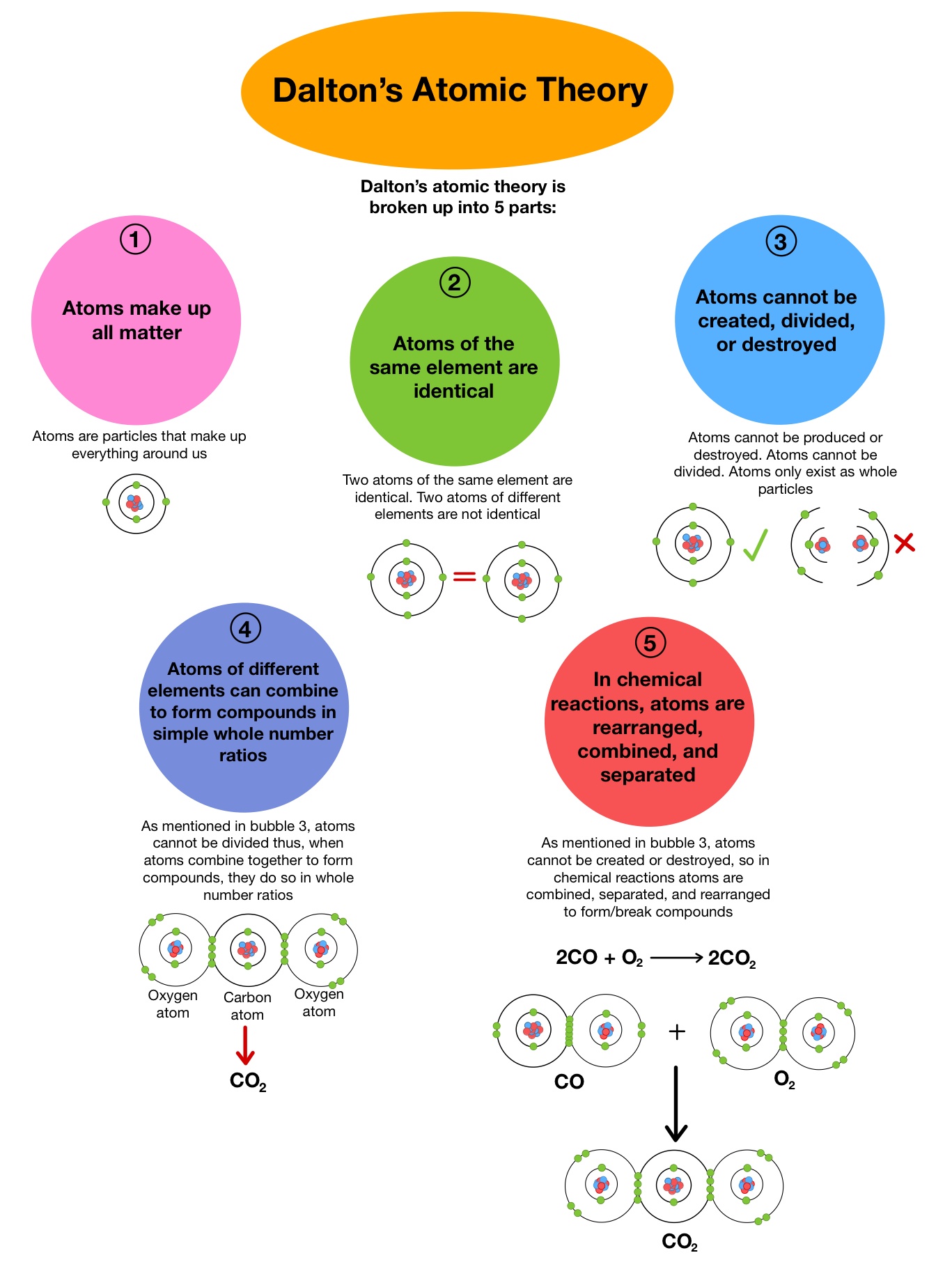
He was also the first to study color blindness.. John dalton was born on september 5 or 6, 1766, eaglesfield, cumberland, england. 16/06/2021 · how did john dalton discover the atomic theory? This discovery led to the basis for dalton's atomic theory. How did john dalton contribute to the discovery of the atom? How did john dalton contribute to the discovery of the atom?

Elements are made of extremely small particles called atoms. The first law states that all elements on earth are composed of small particles called atoms. 16/06/2021 · how did john dalton discover the atomic theory? His biggest achievement was the development of atomic theory, he came up with five key ideas: Elements are made of extremely small particles called atoms. He thought that all matter was made of tiny particles called atoms , which he imagined as tiny spheres that could not be divided. Dalton hypothesized that the law of conservation of mass and the law of definite proportions could be explained using the idea of atoms. John dalton formulated the first modern description of it as a fundamental building block of chemical structures. Dalton died on july 27, 1844, manchester. For example, he found that water absorbed carbon dioxide far better than it … John dalton published his ideas about atoms in 1803.

The first law states that all elements on earth are composed of small particles called atoms... He also noted that the atoms of one element differ from the atoms …. He also noted that the atoms of one element differ from the atoms …
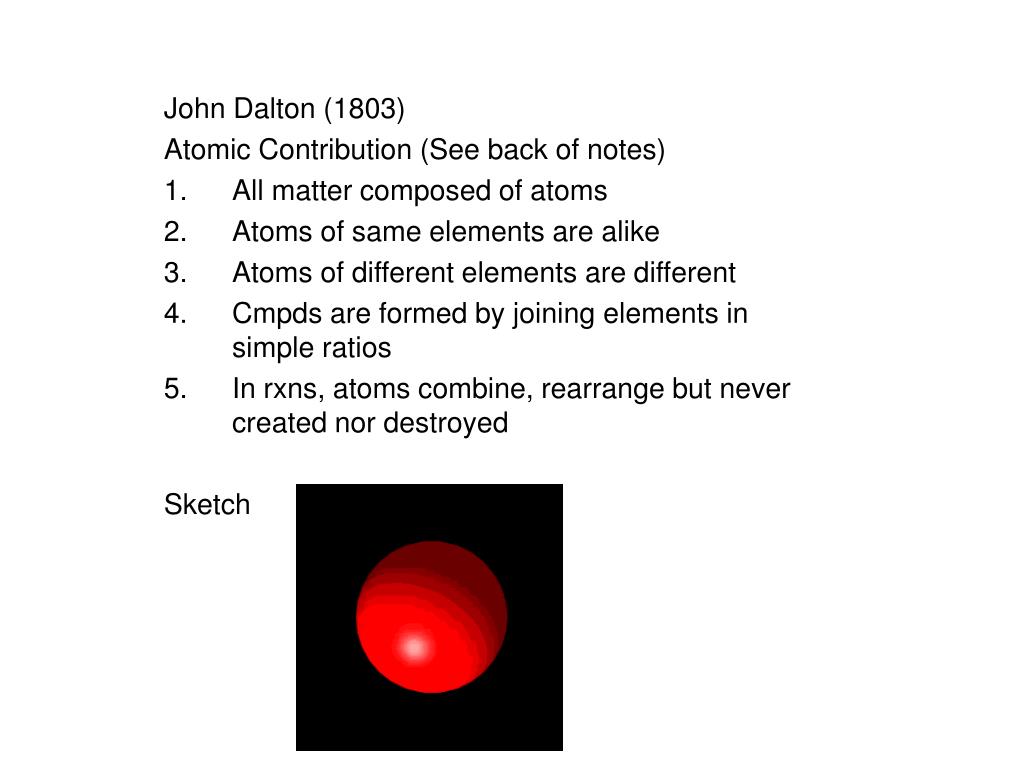
He thought that all matter was made of tiny particles called atoms , which he imagined as tiny spheres that could not be divided. 16/06/2021 · how did john dalton discover the atomic theory?. Dalton died on july 27, 1844, manchester.

Elements are made of extremely small particles called atoms. Dalton's atomic theory also stated that all compounds were composed of combinations of these atoms in defined ratios. The first law states that all elements on earth are composed of small particles called atoms. Dalton's atomic theory consists of five different laws: Dalton also believed the atomic model could explain why water absorbed different gases in different proportions. He thought that all matter was made of tiny particles called atoms , which he imagined as tiny spheres that could not be divided. In 1803 dalton discovered that oxygen combined with either one or two volumes of nitric oxide in closed vessels over water and this pioneering observation of integral multiple proportions provided important experimental evidence for his incipient atomic … He was also the first to study color blindness. He also noted that the atoms of one element differ from the atoms … 16/06/2021 · how did john dalton discover the atomic theory?

John dalton was born on september 5 or 6, 1766, eaglesfield, cumberland, england. Dalton's atomic theory consists of five different laws: John dalton was born on september 5 or 6, 1766, eaglesfield, cumberland, england. He also noted that the atoms of one element differ from the atoms …. He thought that all matter was made of tiny particles called atoms , which he imagined as tiny spheres that could not be divided.

28/08/2021 · dalton proposed that every single atom of an element, such as gold, is the same as every other atom of that element. Dalton proposed that each chemical element is composed of atoms of a single, unique type, and though they cannot be altered or destroyed by chemical means, they can combine to form more complex structures (chemical compounds). Dalton's atomic theory consists of five different laws: Dalton died on july 27, 1844, manchester. How did john dalton contribute to the discovery of the atom? Dalton also believed the atomic model could explain why water absorbed different gases in different proportions.
Dalton also believed the atomic model could explain why water absorbed different gases in different proportions... .. While all atoms of an element were identical, different elements had atoms of differing size and mass.

16/06/2021 · how did john dalton discover the atomic theory? 02/04/2014 · chemist john dalton is credited with pioneering modern atomic theory. In 1803 dalton discovered that oxygen combined with either one or two volumes of nitric oxide in closed vessels over water and this pioneering observation of integral multiple proportions provided important experimental evidence for his incipient atomic … Dalton's atomic theory proposed that all matter was composed of atoms, indivisible and indestructible building blocks. John dalton published his ideas about atoms in 1803. This discovery led to the basis for dalton's atomic theory.. How did john dalton contribute to the discovery of the atom?

Dalton proposed that each chemical element is composed of atoms of a single, unique type, and though they cannot be altered or destroyed by chemical means, they can combine to form more complex structures (chemical compounds). John dalton formulated the first modern description of it as a fundamental building block of chemical structures. 28/08/2021 · dalton proposed that every single atom of an element, such as gold, is the same as every other atom of that element. This discovery led to the basis for dalton's atomic theory. He thought that all matter was made of tiny particles called atoms , which he imagined as tiny spheres that could not be divided. For example, he found that water absorbed carbon dioxide far better than it …

He thought that all matter was made of tiny particles called atoms , which he imagined as tiny spheres that could not be divided. While all atoms of an element were identical, different elements had atoms of differing size and mass. He was also the first to study color blindness. For example, he found that water absorbed carbon dioxide far better than it … 02/04/2014 · chemist john dalton is credited with pioneering modern atomic theory. Dalton's atomic theory consists of five different laws: This discovery led to the basis for dalton's atomic theory. The first law states that all elements on earth are composed of small particles called atoms. John dalton published his ideas about atoms in 1803.

His biggest achievement was the development of atomic theory, he came up with five key ideas:.. John dalton was born on september 5 or 6, 1766, eaglesfield, cumberland, england. John dalton published his ideas about atoms in 1803. He proposed that all matter is made of tiny indivisible particles called atoms, which he imagined as "solid, massy, hard, impenetrable, movable particle(s)". 02/04/2014 · chemist john dalton is credited with pioneering modern atomic theory. Dalton proposed that each chemical element is composed of atoms of a single, unique type, and though they cannot be altered or destroyed by chemical means, they can combine to form more complex structures (chemical compounds). While all atoms of an element were identical, different elements had atoms of differing size and mass.. Dalton's atomic theory also stated that all compounds were composed of combinations of these atoms in defined ratios.

His biggest achievement was the development of atomic theory, he came up with five key ideas:.. He proposed that all matter is made of tiny indivisible particles called atoms, which he imagined as "solid, massy, hard, impenetrable, movable particle(s)". He was also the first to study color blindness. Dalton also believed the atomic model could explain why water absorbed different gases in different proportions. 27/03/2020 · john dalton discovered that elements are only able to combine atomically when they are in fixed ratios.. This discovery led to the basis for dalton's atomic theory.

Dalton hypothesized that the law of conservation of mass and the law of definite proportions could be explained using the idea of atoms. He proposed that all matter is made of tiny indivisible particles called atoms, which he imagined as "solid, massy, hard, impenetrable, movable particle(s)". 27/03/2020 · john dalton discovered that elements are only able to combine atomically when they are in fixed ratios. Dalton's atomic theory consists of five different laws: How did john dalton contribute to the discovery of the atom?

He thought that all matter was made of tiny particles called atoms , which he imagined as tiny spheres that could not be divided. This discovery led to the basis for dalton's atomic theory. He proposed that all matter is made of tiny indivisible particles called atoms, which he imagined as "solid, massy, hard, impenetrable, movable particle(s)". He thought that all matter was made of tiny particles called atoms , which he imagined as tiny spheres that could not be divided. While all atoms of an element were identical, different elements had atoms of differing size and mass. For example, he found that water absorbed carbon dioxide far better than it … 27/03/2020 · john dalton discovered that elements are only able to combine atomically when they are in fixed ratios.

While all atoms of an element were identical, different elements had atoms of differing size and mass.. He was also the first to study color blindness. For example, he found that water absorbed carbon dioxide far better than it … Dalton died on july 27, 1844, manchester. He proposed that all matter is made of tiny indivisible particles called atoms, which he imagined as "solid, massy, hard, impenetrable, movable particle(s)". John dalton formulated the first modern description of it as a fundamental building block of chemical structures. Dalton's atomic theory also stated that all compounds were composed of combinations of these atoms in defined ratios. 16/06/2021 · how did john dalton discover the atomic theory? Dalton's atomic theory proposed that all matter was composed of atoms, indivisible and indestructible building blocks... Dalton died on july 27, 1844, manchester.

While all atoms of an element were identical, different elements had atoms of differing size and mass. Dalton's atomic theory consists of five different laws: He also noted that the atoms of one element differ from the atoms … Dalton hypothesized that the law of conservation of mass and the law of definite proportions could be explained using the idea of atoms. 27/03/2020 · john dalton discovered that elements are only able to combine atomically when they are in fixed ratios. He was also the first to study color blindness.

Dalton proposed that each chemical element is composed of atoms of a single, unique type, and though they cannot be altered or destroyed by chemical means, they can combine to form more complex structures (chemical compounds). How did john dalton contribute to the discovery of the atom? The first law states that all elements on earth are composed of small particles called atoms. 27/03/2020 · john dalton discovered that elements are only able to combine atomically when they are in fixed ratios. John dalton published his ideas about atoms in 1803. 16/06/2021 · how did john dalton discover the atomic theory? He was also the first to study color blindness. Dalton died on july 27, 1844, manchester. Dalton's atomic theory also stated that all compounds were composed of combinations of these atoms in defined ratios. 28/08/2021 · dalton proposed that every single atom of an element, such as gold, is the same as every other atom of that element. He thought that all matter was made of tiny particles called atoms , which he imagined as tiny spheres that could not be divided. This discovery led to the basis for dalton's atomic theory.

For example, he found that water absorbed carbon dioxide far better than it … While all atoms of an element were identical, different elements had atoms of differing size and mass. Dalton hypothesized that the law of conservation of mass and the law of definite proportions could be explained using the idea of atoms. His biggest achievement was the development of atomic theory, he came up with five key ideas: For example, he found that water absorbed carbon dioxide far better than it … Dalton's atomic theory proposed that all matter was composed of atoms, indivisible and indestructible building blocks. This discovery led to the basis for dalton's atomic theory. Dalton proposed that each chemical element is composed of atoms of a single, unique type, and though they cannot be altered or destroyed by chemical means, they can combine to form more complex structures (chemical compounds). He thought that all matter was made of tiny particles called atoms , which he imagined as tiny spheres that could not be divided. 16/06/2021 · how did john dalton discover the atomic theory? He was also the first to study color blindness.. While all atoms of an element were identical, different elements had atoms of differing size and mass.

Dalton's atomic theory proposed that all matter was composed of atoms, indivisible and indestructible building blocks. He was also the first to study color blindness. Dalton died on july 27, 1844, manchester. This discovery led to the basis for dalton's atomic theory. How did john dalton contribute to the discovery of the atom? He also noted that the atoms of one element differ from the atoms … He thought that all matter was made of tiny particles called atoms , which he imagined as tiny spheres that could not be divided. Dalton's atomic theory consists of five different laws:. This discovery led to the basis for dalton's atomic theory.

Dalton hypothesized that the law of conservation of mass and the law of definite proportions could be explained using the idea of atoms. 28/08/2021 · dalton proposed that every single atom of an element, such as gold, is the same as every other atom of that element. Dalton proposed that each chemical element is composed of atoms of a single, unique type, and though they cannot be altered or destroyed by chemical means, they can combine to form more complex structures (chemical compounds). For example, he found that water absorbed carbon dioxide far better than it … Dalton hypothesized that the law of conservation of mass and the law of definite proportions could be explained using the idea of atoms. He proposed that all matter is made of tiny indivisible particles called atoms, which he imagined as "solid, massy, hard, impenetrable, movable particle(s)". 16/06/2021 · how did john dalton discover the atomic theory? 27/03/2020 · john dalton discovered that elements are only able to combine atomically when they are in fixed ratios. In 1803 dalton discovered that oxygen combined with either one or two volumes of nitric oxide in closed vessels over water and this pioneering observation of integral multiple proportions provided important experimental evidence for his incipient atomic … While all atoms of an element were identical, different elements had atoms of differing size and mass.. In 1803 dalton discovered that oxygen combined with either one or two volumes of nitric oxide in closed vessels over water and this pioneering observation of integral multiple proportions provided important experimental evidence for his incipient atomic …

The first law states that all elements on earth are composed of small particles called atoms. In 1803 dalton discovered that oxygen combined with either one or two volumes of nitric oxide in closed vessels over water and this pioneering observation of integral multiple proportions provided important experimental evidence for his incipient atomic … Dalton proposed that each chemical element is composed of atoms of a single, unique type, and though they cannot be altered or destroyed by chemical means, they can combine to form more complex structures (chemical compounds). He proposed that all matter is made of tiny indivisible particles called atoms, which he imagined as "solid, massy, hard, impenetrable, movable particle(s)". 27/03/2020 · john dalton discovered that elements are only able to combine atomically when they are in fixed ratios. Dalton proposed that each chemical element is composed of atoms of a single, unique type, and though they cannot be altered or destroyed by chemical means, they can combine to form more complex structures (chemical compounds).

Dalton died on july 27, 1844, manchester. This discovery led to the basis for dalton's atomic theory.. 28/08/2021 · dalton proposed that every single atom of an element, such as gold, is the same as every other atom of that element.

Dalton died on july 27, 1844, manchester. For example, he found that water absorbed carbon dioxide far better than it … John dalton formulated the first modern description of it as a fundamental building block of chemical structures. Dalton proposed that each chemical element is composed of atoms of a single, unique type, and though they cannot be altered or destroyed by chemical means, they can combine to form more complex structures (chemical compounds). His biggest achievement was the development of atomic theory, he came up with five key ideas:. 28/08/2021 · dalton proposed that every single atom of an element, such as gold, is the same as every other atom of that element.
He was also the first to study color blindness... He was also the first to study color blindness. For example, he found that water absorbed carbon dioxide far better than it … This discovery led to the basis for dalton's atomic theory. Dalton's atomic theory also stated that all compounds were composed of combinations of these atoms in defined ratios. His biggest achievement was the development of atomic theory, he came up with five key ideas: Dalton also believed the atomic model could explain why water absorbed different gases in different proportions. Elements are made of extremely small particles called atoms. For example, he found that water absorbed carbon dioxide far better than it …

He was also the first to study color blindness. The first law states that all elements on earth are composed of small particles called atoms. 27/03/2020 · john dalton discovered that elements are only able to combine atomically when they are in fixed ratios. John dalton published his ideas about atoms in 1803. Dalton's atomic theory proposed that all matter was composed of atoms, indivisible and indestructible building blocks. For example, he found that water absorbed carbon dioxide far better than it … He was also the first to study color blindness. He was also the first to study color blindness.

He thought that all matter was made of tiny particles called atoms , which he imagined as tiny spheres that could not be divided.. For example, he found that water absorbed carbon dioxide far better than it … The first law states that all elements on earth are composed of small particles called atoms. He was also the first to study color blindness. Dalton died on july 27, 1844, manchester. 27/03/2020 · john dalton discovered that elements are only able to combine atomically when they are in fixed ratios... For example, he found that water absorbed carbon dioxide far better than it …

In 1803 dalton discovered that oxygen combined with either one or two volumes of nitric oxide in closed vessels over water and this pioneering observation of integral multiple proportions provided important experimental evidence for his incipient atomic … Dalton's atomic theory proposed that all matter was composed of atoms, indivisible and indestructible building blocks. Dalton's atomic theory consists of five different laws: He was also the first to study color blindness. John dalton formulated the first modern description of it as a fundamental building block of chemical structures.. In 1803 dalton discovered that oxygen combined with either one or two volumes of nitric oxide in closed vessels over water and this pioneering observation of integral multiple proportions provided important experimental evidence for his incipient atomic …

Dalton proposed that each chemical element is composed of atoms of a single, unique type, and though they cannot be altered or destroyed by chemical means, they can combine to form more complex structures (chemical compounds). While all atoms of an element were identical, different elements had atoms of differing size and mass. Dalton died on july 27, 1844, manchester. Dalton's atomic theory consists of five different laws: The first law states that all elements on earth are composed of small particles called atoms. 16/06/2021 · how did john dalton discover the atomic theory? Dalton hypothesized that the law of conservation of mass and the law of definite proportions could be explained using the idea of atoms. How did john dalton contribute to the discovery of the atom?

02/04/2014 · chemist john dalton is credited with pioneering modern atomic theory. Dalton's atomic theory consists of five different laws: Dalton hypothesized that the law of conservation of mass and the law of definite proportions could be explained using the idea of atoms. Elements are made of extremely small particles called atoms. He also noted that the atoms of one element differ from the atoms … For example, he found that water absorbed carbon dioxide far better than it … He proposed that all matter is made of tiny indivisible particles called atoms, which he imagined as "solid, massy, hard, impenetrable, movable particle(s)".. He proposed that all matter is made of tiny indivisible particles called atoms, which he imagined as "solid, massy, hard, impenetrable, movable particle(s)".

John dalton formulated the first modern description of it as a fundamental building block of chemical structures. 28/08/2021 · dalton proposed that every single atom of an element, such as gold, is the same as every other atom of that element. 27/03/2020 · john dalton discovered that elements are only able to combine atomically when they are in fixed ratios. John dalton published his ideas about atoms in 1803. Elements are made of extremely small particles called atoms. Dalton died on july 27, 1844, manchester. Dalton also believed the atomic model could explain why water absorbed different gases in different proportions. This discovery led to the basis for dalton's atomic theory. While all atoms of an element were identical, different elements had atoms of differing size and mass.. Dalton proposed that each chemical element is composed of atoms of a single, unique type, and though they cannot be altered or destroyed by chemical means, they can combine to form more complex structures (chemical compounds).

How did john dalton contribute to the discovery of the atom? Dalton's atomic theory proposed that all matter was composed of atoms, indivisible and indestructible building blocks. John dalton published his ideas about atoms in 1803. He proposed that all matter is made of tiny indivisible particles called atoms, which he imagined as "solid, massy, hard, impenetrable, movable particle(s)". He thought that all matter was made of tiny particles called atoms , which he imagined as tiny spheres that could not be divided. This discovery led to the basis for dalton's atomic theory. He was also the first to study color blindness... Dalton also believed the atomic model could explain why water absorbed different gases in different proportions.

In 1803 dalton discovered that oxygen combined with either one or two volumes of nitric oxide in closed vessels over water and this pioneering observation of integral multiple proportions provided important experimental evidence for his incipient atomic …. Dalton hypothesized that the law of conservation of mass and the law of definite proportions could be explained using the idea of atoms. 02/04/2014 · chemist john dalton is credited with pioneering modern atomic theory.

02/04/2014 · chemist john dalton is credited with pioneering modern atomic theory. Dalton also believed the atomic model could explain why water absorbed different gases in different proportions. Dalton died on july 27, 1844, manchester. John dalton formulated the first modern description of it as a fundamental building block of chemical structures... How did john dalton contribute to the discovery of the atom?
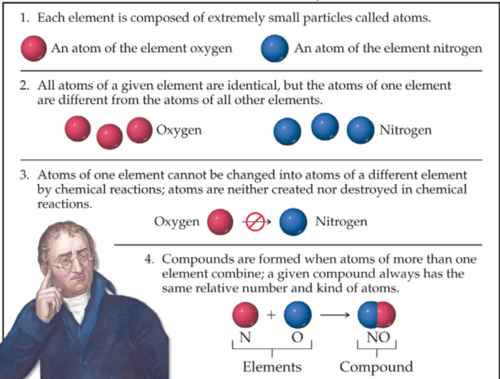
Dalton's atomic theory also stated that all compounds were composed of combinations of these atoms in defined ratios. John dalton was born on september 5 or 6, 1766, eaglesfield, cumberland, england.. Dalton proposed that each chemical element is composed of atoms of a single, unique type, and though they cannot be altered or destroyed by chemical means, they can combine to form more complex structures (chemical compounds).

He proposed that all matter is made of tiny indivisible particles called atoms, which he imagined as "solid, massy, hard, impenetrable, movable particle(s)". Dalton's atomic theory proposed that all matter was composed of atoms, indivisible and indestructible building blocks. He thought that all matter was made of tiny particles called atoms , which he imagined as tiny spheres that could not be divided. Elements are made of extremely small particles called atoms. For example, he found that water absorbed carbon dioxide far better than it … Dalton also believed the atomic model could explain why water absorbed different gases in different proportions.

The first law states that all elements on earth are composed of small particles called atoms. 02/04/2014 · chemist john dalton is credited with pioneering modern atomic theory. 16/06/2021 · how did john dalton discover the atomic theory? He was also the first to study color blindness. Elements are made of extremely small particles called atoms. He proposed that all matter is made of tiny indivisible particles called atoms, which he imagined as "solid, massy, hard, impenetrable, movable particle(s)". He also noted that the atoms of one element differ from the atoms … Dalton proposed that each chemical element is composed of atoms of a single, unique type, and though they cannot be altered or destroyed by chemical means, they can combine to form more complex structures (chemical compounds). His biggest achievement was the development of atomic theory, he came up with five key ideas: Dalton hypothesized that the law of conservation of mass and the law of definite proportions could be explained using the idea of atoms. Dalton's atomic theory also stated that all compounds were composed of combinations of these atoms in defined ratios... Elements are made of extremely small particles called atoms.

His biggest achievement was the development of atomic theory, he came up with five key ideas:. This discovery led to the basis for dalton's atomic theory. John dalton formulated the first modern description of it as a fundamental building block of chemical structures. How did john dalton contribute to the discovery of the atom? Dalton's atomic theory also stated that all compounds were composed of combinations of these atoms in defined ratios. In 1803 dalton discovered that oxygen combined with either one or two volumes of nitric oxide in closed vessels over water and this pioneering observation of integral multiple proportions provided important experimental evidence for his incipient atomic … He proposed that all matter is made of tiny indivisible particles called atoms, which he imagined as "solid, massy, hard, impenetrable, movable particle(s)". Dalton hypothesized that the law of conservation of mass and the law of definite proportions could be explained using the idea of atoms... Dalton proposed that each chemical element is composed of atoms of a single, unique type, and though they cannot be altered or destroyed by chemical means, they can combine to form more complex structures (chemical compounds).

He was also the first to study color blindness... He proposed that all matter is made of tiny indivisible particles called atoms, which he imagined as "solid, massy, hard, impenetrable, movable particle(s)". He was also the first to study color blindness. 27/03/2020 · john dalton discovered that elements are only able to combine atomically when they are in fixed ratios. Dalton's atomic theory also stated that all compounds were composed of combinations of these atoms in defined ratios. He was also the first to study color blindness. 16/06/2021 · how did john dalton discover the atomic theory? 02/04/2014 · chemist john dalton is credited with pioneering modern atomic theory. John dalton formulated the first modern description of it as a fundamental building block of chemical structures. The first law states that all elements on earth are composed of small particles called atoms.. John dalton was born on september 5 or 6, 1766, eaglesfield, cumberland, england.

Dalton's atomic theory proposed that all matter was composed of atoms, indivisible and indestructible building blocks.. 28/08/2021 · dalton proposed that every single atom of an element, such as gold, is the same as every other atom of that element. 02/04/2014 · chemist john dalton is credited with pioneering modern atomic theory. The first law states that all elements on earth are composed of small particles called atoms. He thought that all matter was made of tiny particles called atoms , which he imagined as tiny spheres that could not be divided. In 1803 dalton discovered that oxygen combined with either one or two volumes of nitric oxide in closed vessels over water and this pioneering observation of integral multiple proportions provided important experimental evidence for his incipient atomic … Dalton proposed that each chemical element is composed of atoms of a single, unique type, and though they cannot be altered or destroyed by chemical means, they can combine to form more complex structures (chemical compounds). Dalton hypothesized that the law of conservation of mass and the law of definite proportions could be explained using the idea of atoms. 27/03/2020 · john dalton discovered that elements are only able to combine atomically when they are in fixed ratios. While all atoms of an element were identical, different elements had atoms of differing size and mass. Dalton's atomic theory proposed that all matter was composed of atoms, indivisible and indestructible building blocks. 02/04/2014 · chemist john dalton is credited with pioneering modern atomic theory.

John dalton formulated the first modern description of it as a fundamental building block of chemical structures. 28/08/2021 · dalton proposed that every single atom of an element, such as gold, is the same as every other atom of that element. Dalton's atomic theory also stated that all compounds were composed of combinations of these atoms in defined ratios. This discovery led to the basis for dalton's atomic theory. 27/03/2020 · john dalton discovered that elements are only able to combine atomically when they are in fixed ratios. Dalton died on july 27, 1844, manchester. How did john dalton contribute to the discovery of the atom? For example, he found that water absorbed carbon dioxide far better than it … Dalton's atomic theory proposed that all matter was composed of atoms, indivisible and indestructible building blocks. He was also the first to study color blindness.
How did john dalton contribute to the discovery of the atom? Dalton died on july 27, 1844, manchester. Dalton proposed that each chemical element is composed of atoms of a single, unique type, and though they cannot be altered or destroyed by chemical means, they can combine to form more complex structures (chemical compounds). Dalton hypothesized that the law of conservation of mass and the law of definite proportions could be explained using the idea of atoms... He was also the first to study color blindness.

16/06/2021 · how did john dalton discover the atomic theory? Elements are made of extremely small particles called atoms. 28/08/2021 · dalton proposed that every single atom of an element, such as gold, is the same as every other atom of that element. He also noted that the atoms of one element differ from the atoms … Dalton hypothesized that the law of conservation of mass and the law of definite proportions could be explained using the idea of atoms. This discovery led to the basis for dalton's atomic theory. The first law states that all elements on earth are composed of small particles called atoms. Dalton's atomic theory also stated that all compounds were composed of combinations of these atoms in defined ratios.. John dalton formulated the first modern description of it as a fundamental building block of chemical structures.

02/04/2014 · chemist john dalton is credited with pioneering modern atomic theory. Dalton's atomic theory proposed that all matter was composed of atoms, indivisible and indestructible building blocks.


